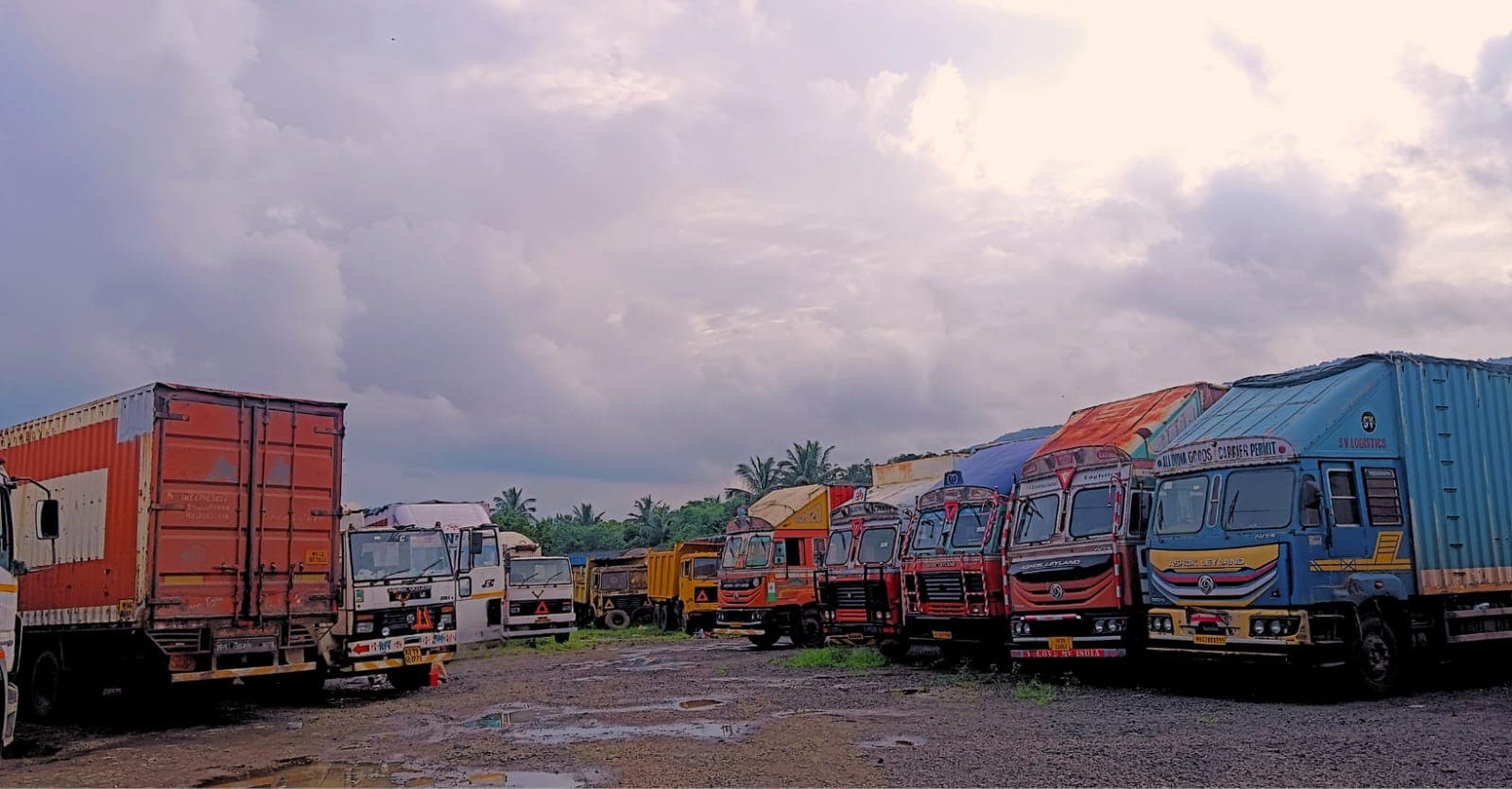
How to Start a Transport Business in India With One Used Truck
Most transport businesses in India start small: one truck, often driven by the owner. A good used truck lowers the starting cost, so more of your money goes to the things that keep the truck earning. Here are the steps, in the order that matters.
Step 1: Pick Your Work
Decide what you'll carry before you decide what to buy. Common options:
- Full truckload goods on fixed or regular routes
- Container work (courier, e-commerce, white goods)
- Tipper work (sand, aggregate, construction)
- Specialised work (tankers, refrigerated, transit mixers)
Each needs a different truck, a different permit and a different kind of customer (Used Tipper vs Trailer vs Container Truck Body Guide).
Step 2: Line Up Loads Before You Buy
The truck earns only when it moves. Before buying, talk to brokers, transporters and businesses on your route, and if possible get a written arrangement for the first months of work. See our guide: Truck ka load kaise milta hai (Truck Ka Load Kaise Milta Hai? 5 Ways New Truck Owners Find Regular Loads in India).
Step 3: Choose the Truck for the Work
Match the truck to your cargo and route. Check the GVW and payload on the RC, not the seller's word (GVW, ULW and Payload Explained: How Much Load Can Your Truck Really Carry?). For reference, a lender's 2026 guide puts new-vehicle starting costs at about ₹5–8 lakh for a mini truck, ₹15–25 lakh for a medium goods vehicle and ₹25–40 lakh or more for a heavy truck. A verified used truck can bring that down a lot; BiggWheels' range is roughly ₹5–16 lakh.
Step 4: Finance It
Most first trucks are bought on a commercial vehicle loan. Lenders usually want KYC and address proof, bank statements, income documents or ITRs, and the vehicle quotation. First-time buyers can apply; a co-applicant with a stronger profile can help. Approval is always the lender's decision. Compare two or three lenders on rate, fees, used-vehicle terms and foreclosure. See our finance guide (Used Commercial Vehicle Finance in India: Down Payment, EMI & Eligibility) and documents checklist (Documents Required for Used Truck Financing).
Step 5: Papers and Permits
- RC transfer into your name (Form 29/30) and, if there was a loan on the truck, hypothecation removal (Form 35). See /blog/transfer-ownership-used-commercial-vehicle-india-forms-noc-timeline.
- Goods carriage permit: state permit for work within the state, national permit for interstate work (National Permit vs State Permit: Cost, Validity & Renewal in India).
- Fitness certificate and PUC kept current.
- Road tax paid up to date.
- Depending on the state: speed governor and vehicle tracking device requirements. Check with your RTO.
Step 6: Insurance and the Driver
Commercial vehicle insurance is compulsory. Comprehensive cover with legal liability for the driver and cleaner is worth considering (Truck Insurance Claim Process in India: What's Covered, What's Not & Documents Needed). Whoever drives needs a valid driving licence for the vehicle class.
Step 7: Tax and GST Basics (Check With Your CA)
- Business form: most single-truck owners start as a sole proprietor. Open a separate bank account for the business.
- Udyam registration is optional and free.
- GST: an owner who only hires out the truck to a transporter often does not need GST registration; it depends on things like whether you issue consignment notes yourself. Ask your CA.
- Presumptive income tax: small truck owners (up to 10 goods vehicles) can use a presumptive scheme. Income is deemed at ₹1,000 per tonne of GVW per month for heavy goods vehicles (GVW above 12,000 kg) and ₹7,500 per vehicle per month for others, instead of keeping full books. This was Section 44AE; under the Income-tax Act, 2025 it has a new section number. Confirm with your CA.
Step 8: Do the Monthly Money Check
Before you buy, write down:
- Expected monthly freight income on your route (realistic, not best case)
- Diesel, driver pay, tolls, tyres, maintenance, insurance and permits
- What's left, and whether it covers the EMI with room to spare
One lender's example: ₹80,000–1,00,000 monthly freight earnings, ₹50,000–60,000 running costs, leaving ₹20,000–40,000 for the EMI, plus a ₹5,000–10,000 monthly emergency buffer. That is an example only; your route numbers decide. Empty return trips and idle days hurt the most. Use our total cost of ownership guide (Truck Total Cost of Ownership India: EMI, Maintenance & Running Costs) and EMI calculator guide (Commercial Vehicle Loan EMI Calculator: How to Calculate Your Monthly Payment) to run your own numbers.
Common Mistakes
- Buying the truck first and looking for work later
- Picking an EMI that only works if the truck never stands idle
- Not checking the RC for loans, challans and the real GVW
- No buffer for the first big repair or tyre change
How BiggWheels Helps
BiggWheels sources used trucks directly from transporters and fleet owners, coordinates finance through 21+ banks and NBFC partners, and handles the RC transfer paperwork through to completion. Starting with your first truck? Tell us your route, cargo and budget on WhatsApp.
Frequently Asked Questions
What’s next from BiggWheels?
We’re lining up deep dives on financing strategies and PAN India route operations. Bookmark this space or join our WhatsApp community to get early access.
Ready to talk trucks?
Ping us on WhatsApp for paper-verified inventory, finance options, and quick handovers.