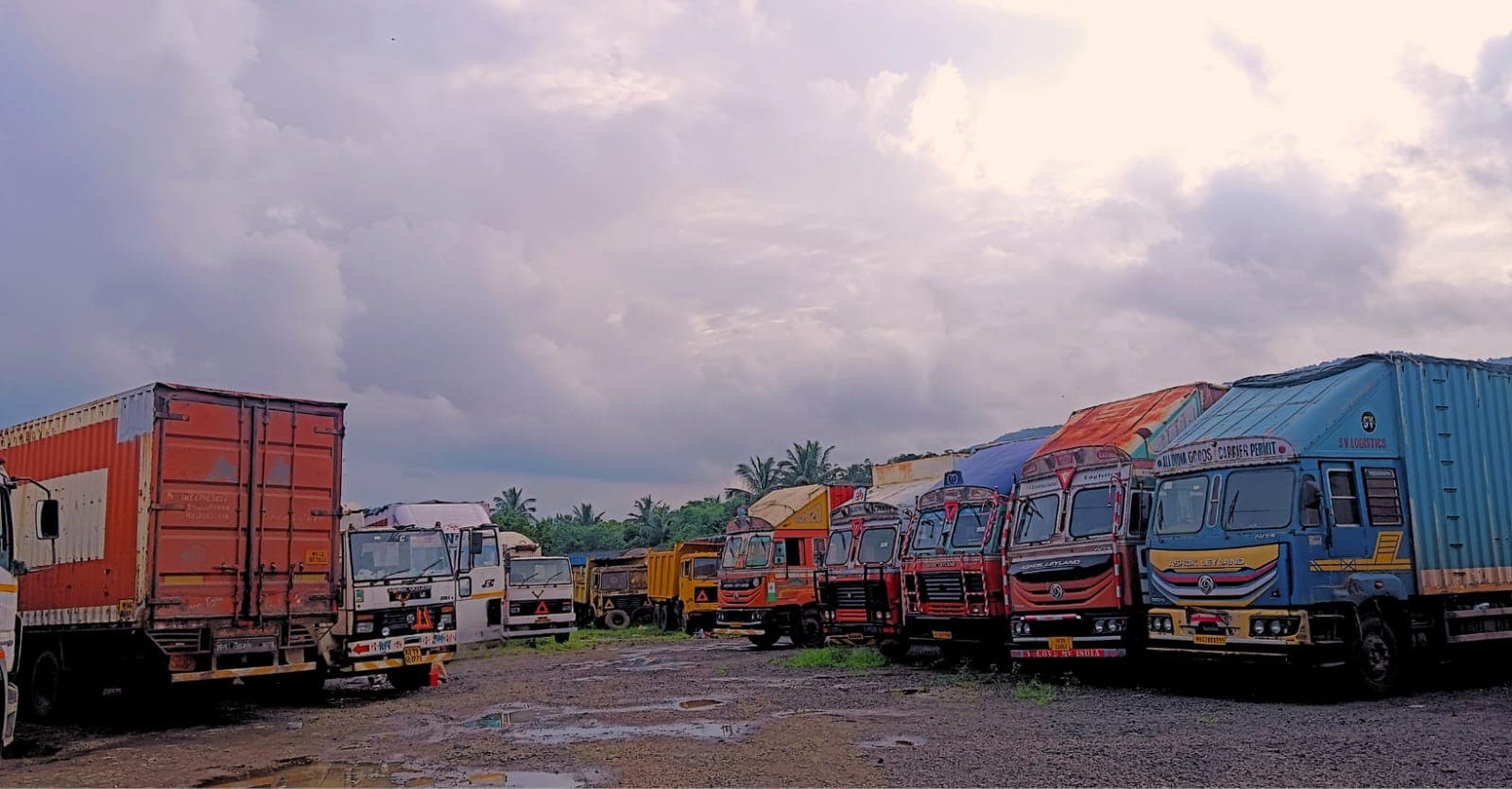
6, 10, 12, 14 and 16 Wheeler Trucks in India: Legal Load Capacity and Which to Buy Used
In India, how much a truck may carry depends on its axles, not just its wheel count. Under the 2018 MoRTH axle limits, a common 6 wheeler (2 axles) works out to about 19 tonnes gross, a 10 wheeler (3 axles) to 28.5 tonnes, and a 12 wheeler (4 axles, twin front) to 36 tonnes. Payload is that gross weight minus the truck’s own weight. Your RC shows the exact registered GVW for your truck.
The Axle Limits Behind Every Wheeler Type
In July 2018 the Ministry of Road Transport and Highways raised the safe axle weights. The ones that matter for most trucks:
- Single axle with two tyres (the usual front axle): 7.5 tonnes.
- Single axle with four tyres (a single rear axle): 11.5 tonnes.
- Tandem axle (two rear axles close together): 21 tonnes.
- Tri-axle (three rear axles close together): 27 tonnes.
- Axles marked for it may carry 1 tonne more each with pneumatic (air) suspension.
- Gross weight can never exceed the sum of the axle limits, and is capped at 49 tonnes for rigid trucks and 55 tonnes for semi-trailers and truck-trailers.
Wheeler Types, Worked Out From Those Limits
- 6 wheeler (2 axles: 2 front tyres + 4 rear): 7.5 + 11.5 = about 19 tonnes. Examples: the 16-ton class such as Tata 1615, Ashok Leyland 1616/1618, BharatBenz 1617.
- 10 wheeler (3 axles: 2 front + tandem rear): 7.5 + 21 = 28.5 tonnes.
- 12 wheeler (4 axles: twin front + tandem rear): 7.5 + 7.5 + 21 = 36 tonnes.
- 14 wheeler (4 axles: 2 front + tri-axle rear): 7.5 + 27 = 34.5 tonnes.
- 16 wheeler (5 axles: twin front + tri-axle rear): 15 + 27 = 42 tonnes.
These are calculated from the axle limits. Wheel counts are named differently in different regions, and makers use different axle layouts, so always count the axles and tyres, and go by the GVW printed on the RC.
GVW Is Not Payload
GVW is the truck plus the load. Payload is GVW minus the truck’s own unladen weight (ULW), so a 28.5 tonne 10 wheeler carries a lot less than 28.5 tonnes of cargo. Our GVW guide explains how to read both on the RC (GVW, ULW and Payload Explained: How Much Load Can Your Truck Really Carry?). Carrying more than the registered GVW is overloading, and fines are now tied to FASTag and VAHAN records (Truck Overloading Rules in India 2026: New FASTag Penalties Explained).
Which One Should You Buy Used?
- 6 wheeler: city and short-haul work, 20 to 32 ft containers, and lower tolls and running cost (32 Feet Single Axle Container Truck for Courier & E-Commerce).
- 10 and 12 wheeler: heavier loads on longer routes, multi axle containers, open body and tippers (SXL vs MXL Used Container Truck: Single vs Multi Axle).
- 14 and 16 wheeler: bulk and heavy freight where the route and loads justify the higher cost.
More wheels mean more tyres, higher tolls and higher running cost, so buy the smallest truck that carries your regular load legally (Truck Total Cost of Ownership India: EMI, Maintenance & Running Costs). Tell us your load and route on WhatsApp and we will suggest the right size from our stock (see trucks in stock).
Frequently Asked Questions
What’s next from BiggWheels?
We’re lining up deep dives on financing strategies and PAN India route operations. Bookmark this space or join our WhatsApp community to get early access.
Ready to talk trucks?
Ping us on WhatsApp for paper-verified inventory, finance options, and quick handovers.